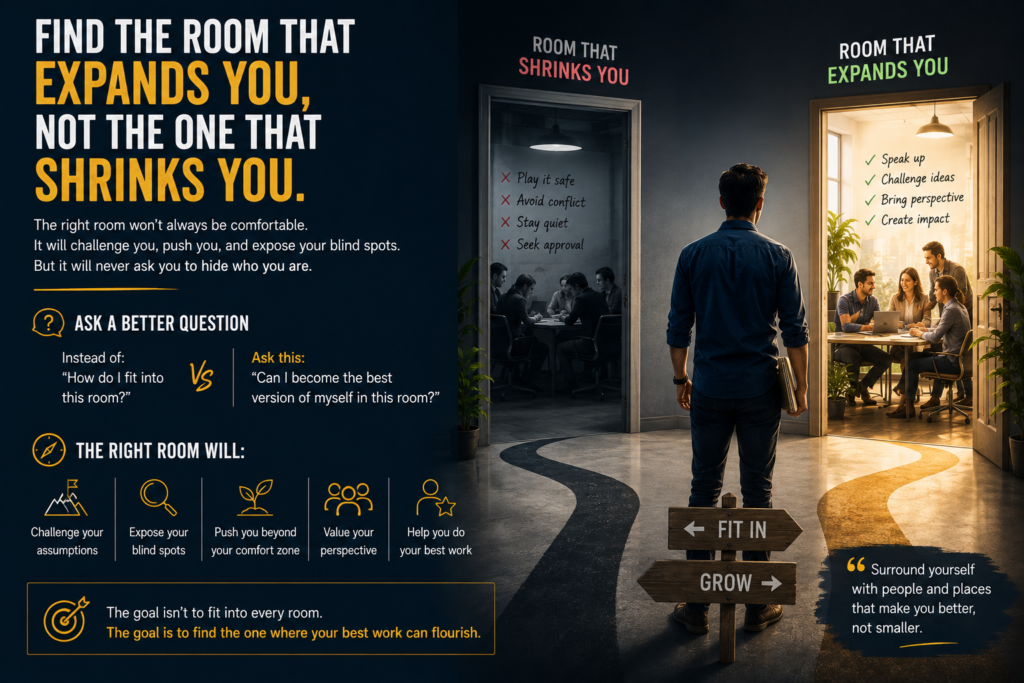
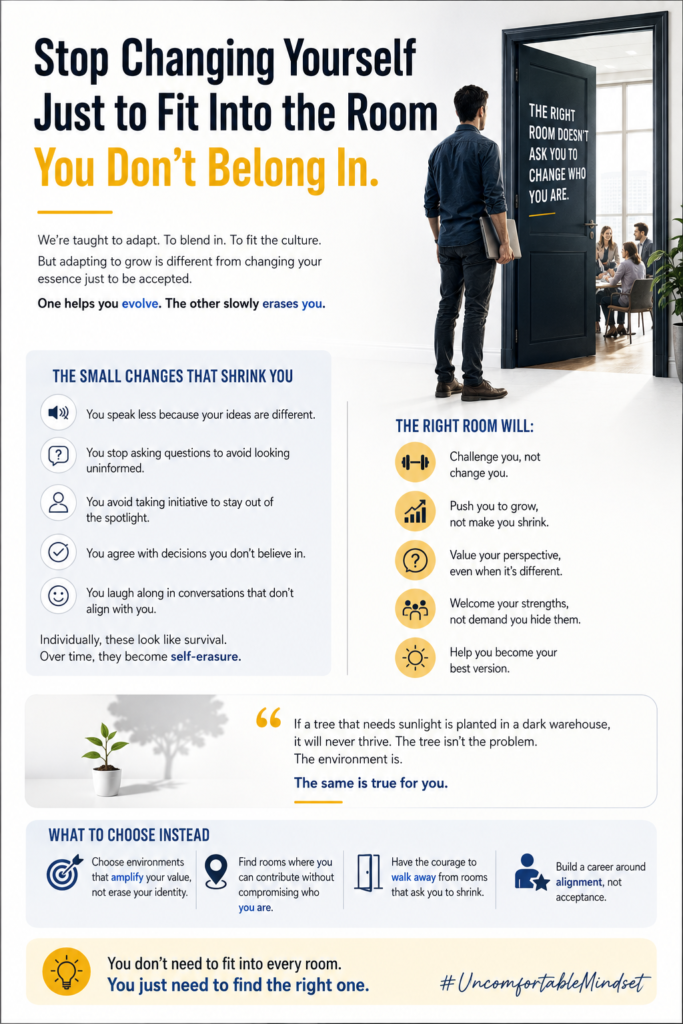
The Need to Belong Slowly Changes Who We Are
One of the most common pieces of career advice is to learn how to adapt. It’s good advice because every new environment demands some level of adjustment. We learn different ways of communicating, understand new expectations, and become more effective by observing how successful people around us operate. Adaptability is a strength, and without it, growth becomes difficult.
The problem begins when adaptation quietly turns into self-modification.
Most people don’t wake up one morning and decide to become someone else. It happens through hundreds of small decisions that feel insignificant in the moment. You stop asking questions because everyone else seems to understand. You hesitate before sharing an idea because the last one didn’t receive much attention. You avoid challenging a decision because disagreement feels like a risk instead of a contribution.
Over time, those moments begin to define your behavior. What started as an attempt to fit into the culture slowly becomes the culture shaping your identity.
The irony is that organizations rarely hire people because they think exactly like everyone else. They hire people for their experiences, perspectives, and unique ways of solving problems. Yet once inside, many professionals spend years trying to become indistinguishable from the people around them. Somewhere between wanting to be accepted and wanting to be successful, they unintentionally leave behind the very qualities that made them valuable in the first place.
The most dangerous part is that this process rarely feels wrong. It feels responsible. We call it being professional, understanding the culture, or learning how the organization works. In reality, we’re often becoming smaller versions of ourselves without realizing it.
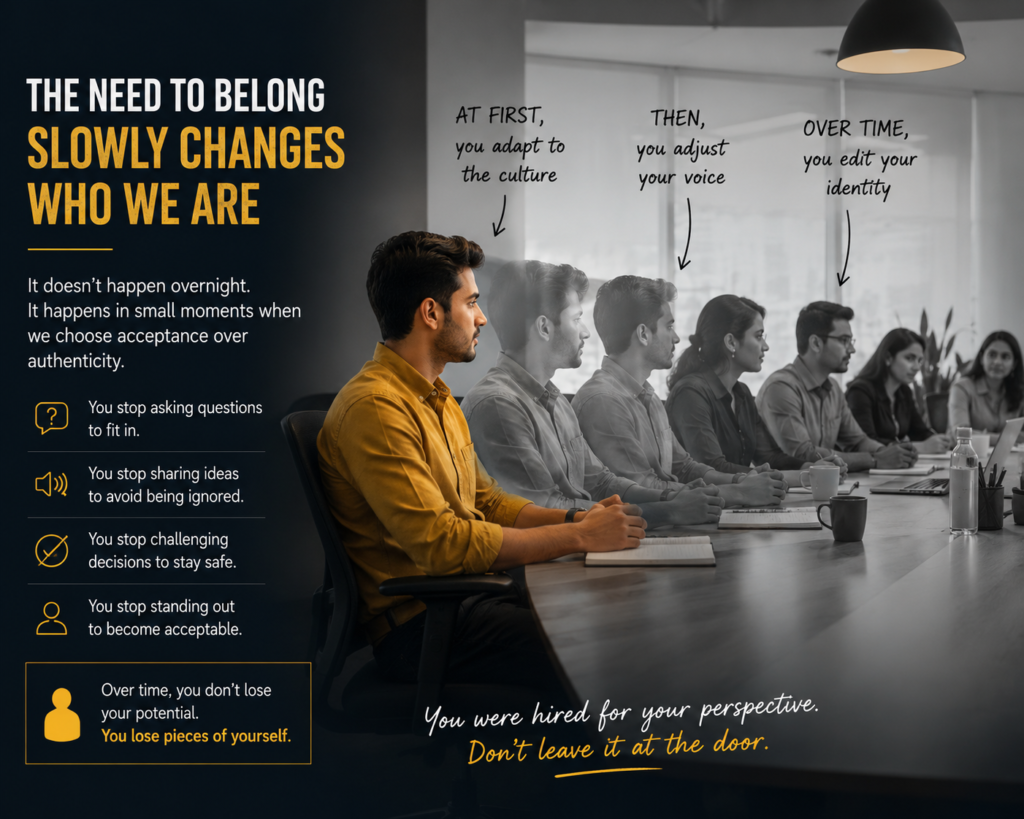
Not Every Environment Deserves Your Best Version
Whenever we struggle to fit into an environment, our first instinct is usually to blame ourselves.
Maybe I need to communicate better.
Maybe I’m too opinionated.
Maybe I should think like everyone else.
Sometimes those questions are healthy because they lead to self-improvement. Every professional needs feedback, and every career demands continuous learning. But there is an important difference between feedback that helps you grow and an environment that expects conformity.
Healthy organizations challenge your ideas, not your identity. They encourage disagreement because better decisions are rarely born from unanimous thinking. They understand that respectful conflict often produces stronger outcomes than silent agreement.
Unfortunately, not every workplace operates that way.
Some organizations unintentionally reward predictability over creativity. The safest opinion receives the most appreciation. Meetings become exercises in validation instead of exploration. People begin optimizing for acceptance rather than impact because they learn that being right matters less than being agreeable.
When that happens, people don’t stop having ideas.
They simply stop sharing them.
The organization appears aligned, but beneath the surface it has lost something incredibly valuable: intellectual diversity. Innovation slows, not because talented people disappeared, but because talented people stopped believing their perspective was worth expressing.
An environment that consistently asks you to suppress your curiosity, your principles, or your perspective isn’t making you stronger. It’s teaching you that fitting in is more important than contributing.
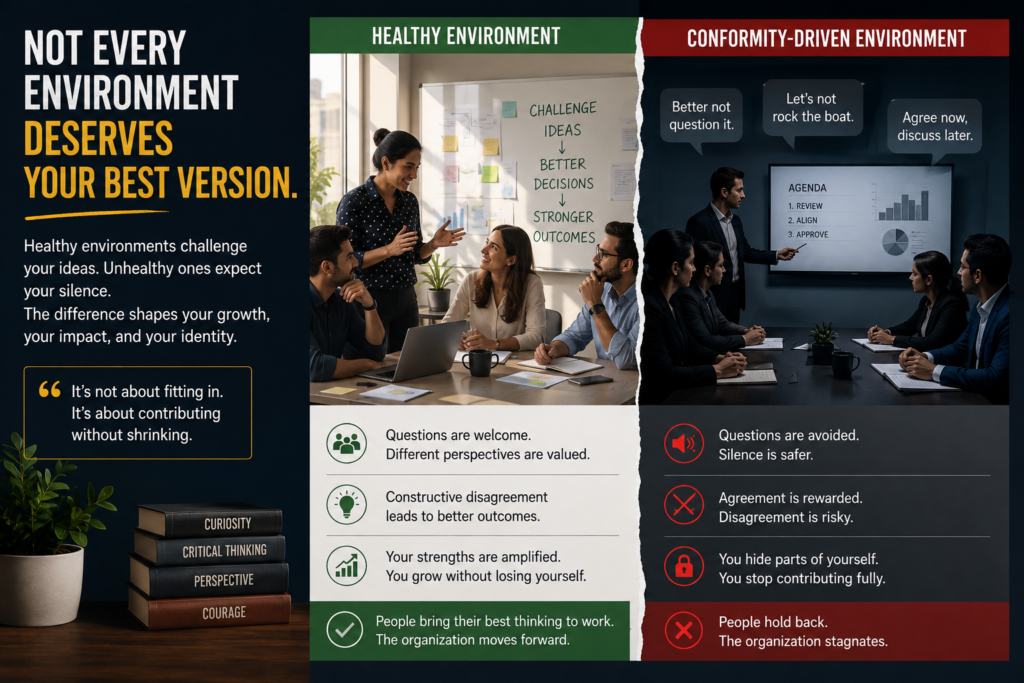
Find the Room That Expands You, Not the One That Shrinks You
There’s another way to think about growth.
For years, I believed the right question was, “How do I fit into this room?” It seemed like the logical thing to ask because success often looks like belonging.
Today, I think that’s the wrong question.
A better question is, “Can I become the best version of myself in this room?”
Those questions lead to completely different decisions.
The first encourages adaptation for acceptance. The second encourages growth without sacrificing authenticity.
The right environment won’t always make you comfortable. In fact, it should make you uncomfortable in the best possible way. It should expose your blind spots, challenge your assumptions, and push your thinking further than you’ve ever pushed it yourself. But it should never require you to silence your curiosity or hide your strengths simply to earn a seat at the table.
Every meaningful career eventually reaches a point where you have to decide whether you’re building a reputation based on fitting in or based on creating value. Those paths may look similar in the beginning, but they lead to very different destinations.
The people who leave a lasting impact aren’t usually the ones who mastered the art of blending into every room. They’re the ones who found environments where their perspective could challenge existing ideas, improve decisions, and make everyone around them better.
Perhaps that’s the real lesson.
The goal isn’t to become someone every room will accept.
The goal is to become someone whose best work can flourish because they’re in the right room.