We often assume that professional growth is about becoming better at what we do. We develop expertise, build a reputation, deliver consistent results, and become the person others rely on.
But there is a point where the very qualities that helped us succeed can begin to limit our growth. Not because those qualities lose their value, but because we continue applying them in situations that demand something different.
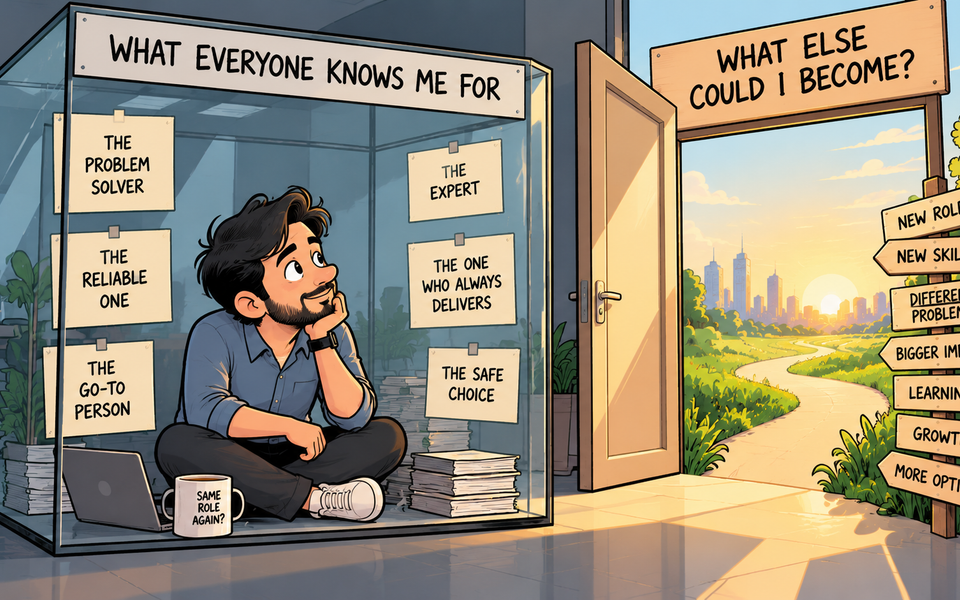
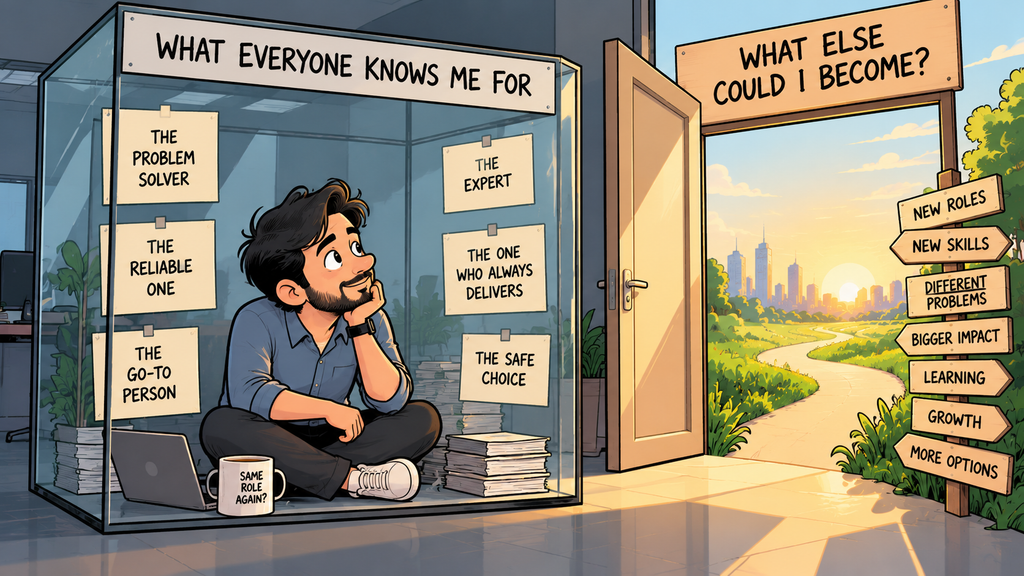
This is the identity prison: when our past achievements, established reputation, and familiar strengths begin to dictate what we believe we can do next.
When Reputation Becomes an ExpectationEvery workplace develops informal identities for its people. Someone is known for solving complex problems. Someone else is the person who never misses a deadline. Another employee is recognized for being technically strong, exceptionally reliable, or always willing to help. These reputations are earned, and they have real value. They build trust and make collaboration easier.
The problem begins when a reputation stops being a description of past performance and becomes an expectation of future behavior. The person who is good at troubleshooting gets pulled into every technical issue. The employee who consistently delivers on tight deadlines receives more urgent work. The manager who can handle difficult situations becomes the default person for every escalation.
Over time, the organization becomes accustomed to receiving a particular contribution from a particular person. That arrangement may work well for the immediate team. However, it can make it harder for that individual to explore new responsibilities, develop different capabilities, or redirect their attention toward higher-impact work. Your reputation can open doors, but it can also determine which doors people expect you to walk through.
The Difference Between Being Capable and Being Defined by a Capability
Being good at something does not mean it should remain your primary responsibility forever. An engineer may be excellent at writing code, but career growth might eventually require system design, technical strategy, mentoring, or broader business understanding. A manager may have earned recognition as a strong individual contributor, but continuing to solve every difficult problem personally can prevent the team from developing independent ownership. Similarly, an experienced professional may be known for deep expertise in a particular technology. If they rely exclusively on that expertise, they may struggle to adapt when the architecture, tools, or business requirements change.
In each case, the existing capability remains valuable. What changes is the level at which that capability needs to be applied. The transition from individual contributor to leader, for example, is not simply about doing the same work faster or handling a larger volume of tasks. It often requires a different definition of contribution: enabling others, making decisions, managing trade-offs, and building systems that produce results beyond one’s personal effort. This is where many professionals encounter a difficult reality. The skills that make you successful at one level do not automatically make you successful at the next. Experience provides an advantage, but it does not eliminate the need to learn. Why We Continue Repeating What Already WorksThe identity prison is not created by workplace expectations alone. Our own behavior can reinforce it.
There are several practical reasons for this.
First, familiar work provides predictable results. When you know a system well, you can solve problems confidently. When you enter an unfamiliar area, you may need to ask questions, make mistakes, and accept that your judgment is still developing.
Second, existing expertise provides immediate validation. People recognize your contribution, ask for your advice, and trust your decisions. Starting something new can mean temporarily losing that sense of competence.
Third, established habits are efficient in the short term. If you can resolve a problem in fifteen minutes, explaining it to someone else may take an hour. But if that problem occurs repeatedly, solving it yourself every time can create long-term dependency.
Finally, there is the pressure of expectations. When people have come to rely on you for a particular contribution, changing your focus may create friction. You might worry about disappointing your team, appearing less helpful, or losing the reputation you worked hard to build. These pressures can make familiar work the easiest choice, even when it is no longer the best choice for your development.
The uncomfortable part is that no one needs to explicitly prevent your growth. A combination of convenience, habit, external expectations, and personal attachment to an established identity can be enough to keep you in the same pattern.
When Organizations Benefit From Your Old Identity
There is also an organizational dimension to this problem. Businesses naturally rely on people whose capabilities are proven. Managers need dependable employees, teams need experienced specialists, and critical projects require people who understand the risks. There is nothing inherently wrong with this. However, short-term operational needs can conflict with long-term employee development. A manager may hesitate to move an engineer away from a critical system because replacing that expertise would be difficult. A team may continue routing complex issues to the same specialist because doing so is faster than developing additional expertise elsewhere.
These decisions can be rational in isolation. The problem emerges when they become permanent arrangements without a plan to reduce dependency or create new opportunities. The organization continues receiving value from an employee’s existing strengths, while the employee may struggle to build the capabilities needed for a different role. This creates a genuine tension between immediate delivery and long-term development.
The solution is not to stop relying on experienced people. It is to avoid building processes that depend indefinitely on the same individuals. Knowledge sharing, succession planning, delegation, cross-training, and deliberate role development help organizations preserve expertise without making individual employees permanently responsible for the same work.
How to Break Out of the Identity Prison
Escaping this pattern does not require rejecting your strengths or abandoning the reputation you have built. It requires using those strengths as a foundation rather than treating them as boundaries.
1. Recognize when your existing strengths are being overused.Ask yourself whether your current responsibilities are helping you develop or simply giving you repeated opportunities to demonstrate what you already know. If most of your time is spent solving familiar problems, you may be maintaining your existing value without expanding it.
2. Stop equating personal involvement with contribution.Being the person who solves every problem can feel productive, but it may not be the best use of your experience. Document recurring solutions, develop other people, automate repetitive work, and distribute ownership where appropriate. The goal is not to make yourself less valuable; it is to increase the value you create beyond your individual execution.
3. Deliberately develop capabilities your current role does not demand.If you want to move toward leadership, develop your ability to make decisions, communicate trade-offs, and build team capability. If you want to move toward architecture, work on system-level thinking and long-term technical consequences. If you want to explore another discipline, find practical opportunities to learn and demonstrate those skills. Do not assume that being excellent in your current role will automatically prove your readiness for a different one.
4. Communicate the direction in which you want to grow.People cannot always infer your ambitions from your current performance. Discuss your development goals with your manager, identify opportunities to take on different responsibilities, and agree on what evidence would demonstrate readiness. You may also need to establish boundaries around recurring tasks that prevent you from making progress toward those goals.
5. Accept that changing your reputation takes time. People build expectations from repeated experiences. If you want colleagues to recognize a different capability, you need to demonstrate it consistently. Some existing expectations may take time to change, and not every organization will provide the opportunities you need. Recognizing that reality can help you decide whether to reshape your current role or pursue growth elsewhere.
Your Past Is Evidence, Not a Contract
Professional identity is useful. It helps people understand what we bring to a team and gives us confidence in our abilities. But it should remain flexible. The fact that you have spent years developing expertise in one area does not mean you must spend the rest of your career doing the same work. The fact that people rely on you for a particular contribution does not mean you must personally own it forever. And the fact that you have succeeded through one approach does not mean that approach will serve every future challenge.
Growth sometimes requires you to do less of what you are already good at and more of what you still need to learn. That can be uncomfortable because the results are less predictable, recognition may take longer, and your existing reputation may not immediately reflect your emerging capabilities. But remaining in familiar territory has a cost, too. It can narrow your experience, limit your options, and make your professional identity increasingly dependent on a role or skill that may eventually change.
The objective is not to abandon the person you have become. It is to ensure that the person you have become does not prevent you from developing further. Your past success should explain what you are capable of. It should not decide what you are allowed to become.
#UncomfortableMindset #CareerGrowth #ProfessionalDevelopment #Leadership